
Recovering Abandoned Carts via Email
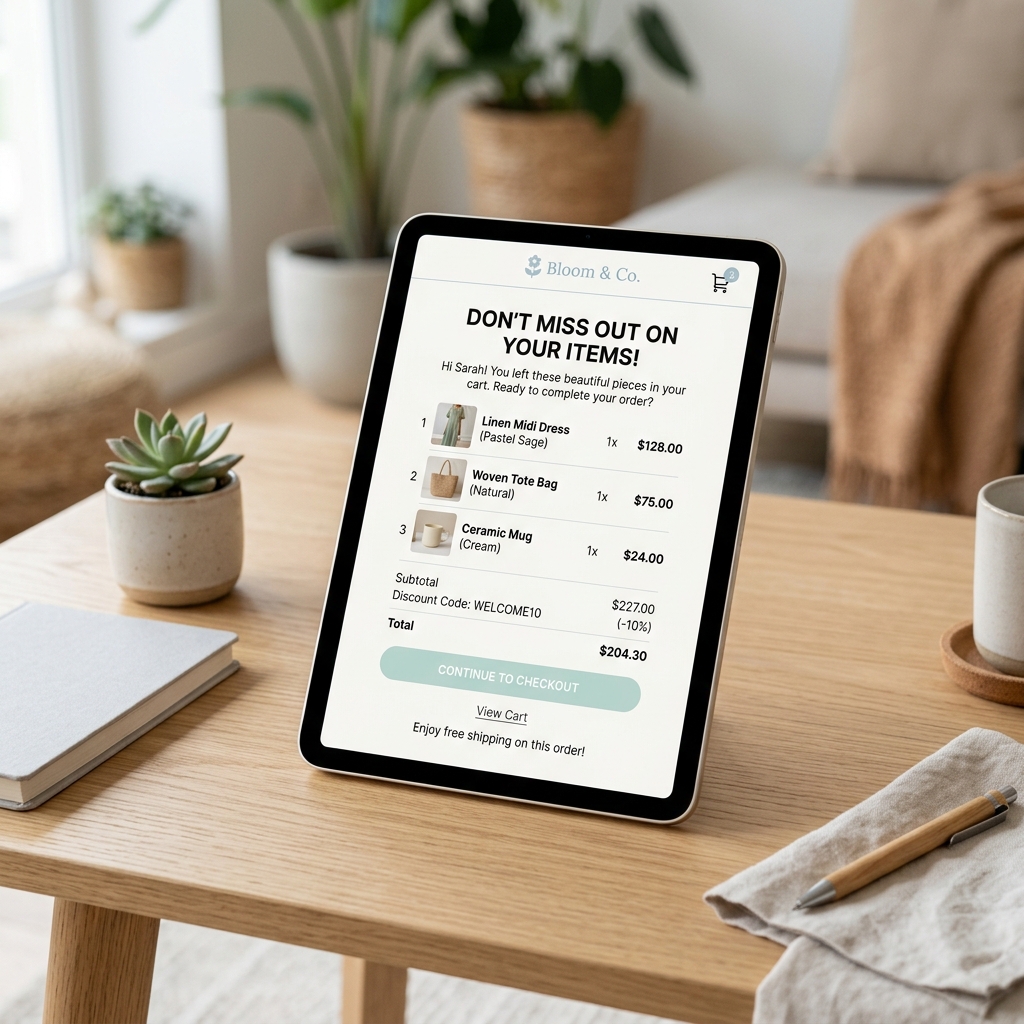
An abandoned cart is not a rejection. It’s a pause.
Most brands treat cart abandonment like a failure — a number to minimize, a leak to plug. But if you shift your perspective, every abandoned cart is a customer who was genuinely interested, who clicked, browsed, added to cart, and then hesitated. That hesitation is information. And information is an invitation to have a better conversation.
The question isn’t “how do I drag them back?” The question is “what stopped them, and can I help?”
That shift — from extraction to empathy — is what separates an abandoned cart sequence that converts from one that gets marked as spam.
Wondering what a respectful recovery sequence looks like in practice? See how Taildove makes it simple to build sequences that feel helpful, not pushy. Try Taildove for free.
Why People Really Leave
Before you write a single word of recovery copy, you need to understand why your customers left in the first place. The data tells a consistent story: unexpected shipping costs account for nearly half of all cart abandonments. After that, it’s a mix of comparison shopping, distraction, and a nagging feeling that something about the purchase didn’t feel quite right — security concerns, unclear return policies, or simply not enough trust built yet.
Notice how few of those reasons have anything to do with the product itself. They left because of friction, not because they didn’t want what you were selling. Your recovery sequence needs to remove the friction, not just remind them the cart exists.
The 3-Email Recovery Sequence
Email 1: The Helpful Reminder (1 Hour Post-Abandonment)
Send this one fast, and keep it light. The goal isn’t to sell — it’s to be useful. Show them exactly what’s in their cart, with clear product images and a single link back to checkout. Your tone should be the email equivalent of a friend gently tapping you on the shoulder: “Hey, I think you left something.” No urgency, no pressure. Just a quiet, helpful reminder that feels almost like good service rather than marketing.
Email 2: The Trust Builder (24 Hours Post-Abandonment)
This is where you earn the sale, not demand it. Pull a real customer review of the specific product they left behind — not a generic five-star snippet, but something with texture and detail that sounds like a real person. Remind them of your return policy, your secure checkout, your satisfaction guarantee. You’re not pushing; you’re answering the quiet objections that stopped them the first time. Think of this email as the knowledgeable friend who says, “I’ve used this, here’s what I think.”
Email 3: The Last Call (48 Hours Post-Abandonment)
Now, and only now, is it appropriate to sweeten the deal. A small, genuine incentive — 10% off, free shipping, a bonus gift — gives the fence-sitters a clear reason to act. Set a real deadline, not a manufactured one. “Complete your order in the next 12 hours” works because it’s honest. A countdown timer that resets every time they reload the page is a trust-killing move you can’t afford to make.
What Makes Recovery Sequences Fail
The most common mistake isn’t the copy or the timing. It’s treating every abandoned cart the same way. Someone who left because of a $12 shipping fee needs a different conversation than someone who left because they weren’t sure about your return policy. If your platform lets you segment by behavior — and it should — use that information.
The second most common mistake is waiting too long. Every hour that passes after abandonment, the emotional momentum of that purchase cools. The window is real. An email sent one hour post-abandonment converts at roughly three times the rate of one sent 24 hours later.
Personalize the subject line with the actual product name. Include a product image. And for every email in the sequence, make it trivially easy to get back to checkout — one click, not three.
Measuring What Actually Matters
Your recovery rate — the percentage of abandoned carts that eventually convert — is the number to watch. A well-built three-email sequence can recover 10 to 20 percent of lost carts. That’s not a marginal improvement; for most ecommerce stores, that’s a meaningful portion of monthly revenue that was nearly gone.
Track reply rates too. When customers respond to recovery emails, they’re giving you a gift — direct feedback on what stopped them. Read those replies carefully. They’re your product roadmap for reducing abandonment in the first place.
An abandoned cart is a conversation that started and then paused. Your recovery sequence is how you pick it back up — thoughtfully, helpfully, and with genuine respect for why they hesitated. Do that well, and you’re not just recovering revenue. You’re building the kind of trust that turns a one-time buyer into someone who comes back without needing a reminder at all.
[!IMPORTANT] Start Recovering Revenue Today Don’t leave money on the table. Start building respectful, high-converting recovery sequences with Taildove for free today. Try Taildove for free today.
Ready to boost your deliverability?
Join 2,000+ businesses sending better email with Taildove.